Why STPP Matters in Detergents
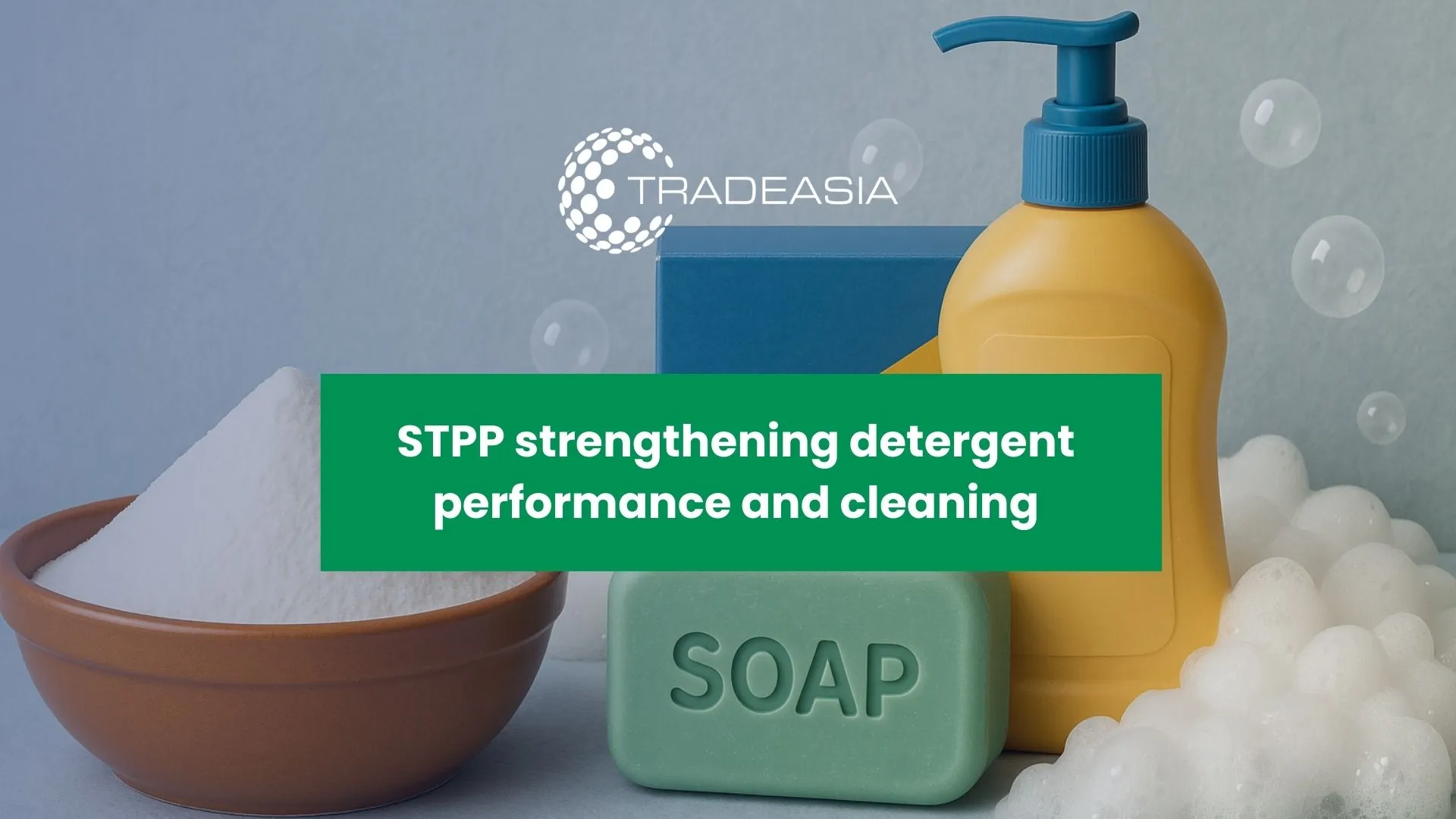
Sodium Tripolyphosphate (STPP) is one of the most critical functional ingredients used in modern detergent formulations. As a builder, STPP enhances cleaning performance by softening water, stabilizing dirt particles, and improving surfactant effectiveness. Its ability to maximize the efficiency of other detergent components makes it indispensable in laundry powders, automatic dishwasher detergents, liquid cleaners, and industrial cleaning systems used across Asia.
Throughout the detergent industry, builders play a vital role in ensuring that surfactants, such as SLES, SLS, and LAS can work effectively. Without builders, hard water ions like calcium and magnesium interfere with surfactant function, causing poor foaming, reduced cleansing, and sticky deposits on fabrics or surfaces. STPP solves this fundamental problem by binding these ions, creating the right chemical environment for efficient cleaning.
In Asia, where water hardness varies significantly from region to region, STPP is especially valuable. Countries such as India, China, Indonesia, and the Philippines rely heavily on STPP-based detergent systems because they provide stability, cost efficiency, and consistently strong cleaning performance across diverse water conditions. As a result, STPP remains a cornerstone of cleaning chemical formulation in both household and industrial applications.
Chemical Structure and Functional Role
STPP (Na₅P₃O₁₀) is a tripolyphosphate compound consisting of three phosphate units connected in a chain. This structure gives STPP the ability to bind multivalent metal ions, particularly calcium (Ca²⁺) and magnesium (Mg²⁺), which are known to reduce cleaning efficiency. By forming stable complexes with these ions, STPP prevents them from interfering with surfactant function.
In detergent chemistry, STPP is classified as a builder, a category of materials designed to optimize the conditions needed for cleaning agents to work effectively. Builders are essential in powder detergents, heavy-duty cleaning applications, and water-intensive industries. STPP is one of the most efficient and cost-effective builders due to its strong chelating ability and compatibility with most surfactants used in Asia.
Another key role of STPP is its buffering capacity, which helps maintain the ideal alkalinity level during the washing process. Most detergents perform best in mildly alkaline conditions, and STPP ensures that the pH remains stable even when soils or contaminants introduce acidity. This stabilizing effect contributes to uniform cleaning results, longer detergent shelf life, and improved formulation stability.
Water Softening: The Backbone of Effective Cleaning
Water hardness is a major barrier to effective cleaning, especially in regions with high mineral content. Hard water ions bind to surfactants, forming insoluble precipitates that reduce foam and leave residues on fabrics and surfaces. STPP overcomes this challenge by acting as a highly efficient water softener, binding minerals and preventing interference with the cleaning process.
In laundry applications, STPP’s water softening capability prevents grey stains, soap scum, and re-deposition of dirt on fabrics. This is particularly important in tropical Asian markets where high humidity can worsen fabric discoloration if washing is not effective. STPP ensures that detergents remain active, allowing cleaner washes with less mechanical effort or additional water.
For industrial cleaning, where equipment and surfaces may be exposed to minerals, scale build-up, and heavy soils, STPP helps maintain system efficiency. It ensures that cleaning agents work at maximal performance even in harsh water conditions. This makes STPP indispensable in food processing, hospitality, commercial laundry, and manufacturing environments across Asia.
STPP for Surfactant Efficiency and Soil Suspension
Surfactants, the cleaning “workhorses” of detergents, rely heavily on STPP to achieve peak performance. By binding minerals and maintaining alkalinity, STPP ensures that anionic surfactants like LAS and SLS produce abundant foam and effectively lift soil from fabric fibers. Improved foam stability not only enhances cleaning but also increases consumer satisfaction, especially in markets where visible foam is associated with product quality.
Another important function of STPP is soil suspension. Once dirt is lifted from the surface or fabric, STPP prevents it from settling back. This happens through its ability to disperse particles and keep them suspended in wash water until they are rinsed away. Without builders like STPP, re-deposition can occur, leaving fabrics looking dull or stained.
STPP also enhances the cleaning performance of nonionic surfactants used for oily or greasy soils. Many Asian consumers use detergents for heavy meals, street foods, or industrial oils, and STPP ensures that these soils remain dispersed and do not smear or redeposit during washing. This synergy makes STPP a key component in both domestic and commercial cleaning formulations.
Applications in Laundry Detergents, Dishwashing, and Industrial Cleaners
-
Laundry Detergents
STPP is widely used in powdered laundry detergents and laundry bars throughout Asia. It improves stain removal, prevents fabric greying, and supports strong foaming action. Its role in water softening is particularly useful in regions with moderate to high hardness levels, enabling consistent wash performance.
-
Dishwashing Products
In both manual and automatic dishwashing detergents, STPP enhances degreasing, supports anti-spotting performance, and prevents food residues from sticking to surfaces. These benefits are crucial in foodservice and hospitality industries where hygiene standards are strict.
-
Industrial and Institutional Cleaners
STPP is used in heavy-duty degreasers, floor cleaners, and CIP (clean-in-place) systems because it helps dissolve oils, maintain alkalinity, and prevent mineral scale formation. Many factories in Asia choose STPP-based cleaners due to their reliability, cost-effectiveness, and versatility.
STPP in Soap Manufacturing: Texture, Hardness, and Stability
Beyond detergents, STPP plays a significant role in traditional and industrial soap manufacturing. Its ability to interact with fats and oils contributes to improved bar hardness, reduced cracking, and enhanced structural integrity during storage and use. This is especially valuable in tropical climates, where soaps can soften or deform due to high humidity.
STPP also improves soap texture by acting as a dispersing agent, ensuring that fillers, fragrances, and colorants are evenly distributed. This enhances appearance, performance, and shelf stability. In regions like Southeast Asia where aesthetic factors strongly influence consumer preference, STPP helps manufacturers maintain consistency.
As a stabilizer, STPP prevents rancidity by binding metal ions that catalyze oxidation of soap fats. This is essential for preserving fragrance, color, and product quality over time. For commercial soap manufacturers in India, Malaysia, and Sri Lanka, STPP is considered an essential ingredient for maintaining long-term product integrity.
Environmental Considerations and Phosphate Management in Asia
While STPP is effective and widely used, it is part of a broader discussion concerning phosphates in wastewater. Certain regions have introduced regulations to limit phosphate discharge due to eutrophication concerns. However, Asia’s regulatory landscape is diverse, and phosphate restrictions vary significantly across countries.
In Singapore, Malaysia, and Thailand, environmental guidelines encourage responsible phosphate management rather than outright bans, allowing formulators to continue using STPP while implementing proper wastewater treatment. Many detergent manufacturers rely on advanced effluent treatment systems that remove phosphates before discharge.
Furthermore, innovations in phosphate recovery technologies are enabling industries to reclaim phosphates from wastewater and reuse them as fertilizers or industrial raw materials. This aligns with circular economy goals and reduces long-term environmental impact. STPP remains a key ingredient where regulations allow, thanks to its unmatched performance benefits.
Technical Formulation Guidelines for STPP Use
Formulating with STPP requires balancing concentration, compatibility, and processing conditions. In powder detergents, STPP typically constitutes 20 - 40% of the formulation, depending on the cleaning strength required and water hardness conditions in the target market. Its granularity and hydration behavior are also important for ensuring uniform mixing.
For liquid formulations, STPP may be used in dissolved or partially neutralized form to enhance stability. In dishwashing liquids and industrial cleaners, its buffering capacity and dispersing ability significantly influence the final product’s rheology and clarity. Manufacturers must also consider pH management and interaction with other ingredients like enzymes and optical brighteners.
In soap production, STPP dosage must be carefully controlled to avoid excessive hardness or brittleness. Granulated STPP is preferred for even dispersion in soap flakes or slurry. Asian formulators often adjust STPP levels based on climate conditions, raw material quality, and market preference for foam, texture, and mildness.
Synergies with Other Detergent Ingredients
STPP works synergistically with a wide range of detergent ingredients, enhancing the overall cleaning efficiency:
-
Surfactants
STPP boosts the cleaning power of anionic, nonionic, and amphoteric surfactants by maintaining optimal water conditions for foaming and soil removal.
-
Enzymes
In enzyme-based detergents, STPP helps create stable, alkaline conditions that improve enzyme activity and prevent metal-ion inactivation particularly important for stain-removing enzymes like protease and amylase.
-
Bleaching Agents
STPP stabilizes hydrogen peroxide and percarbonate systems, preventing premature decomposition. This enhances whiteness, color safety, and performance in multi-functional detergents widely used in Asia.
Conclusion
Sodium Tripolyphosphate remains one of the most important and versatile ingredients in modern soap and detergent formulations. Its roles in water softening, surfactant boosting, soil suspension, buffering, and stabilization make it essential for consistent, high-quality cleaning performance especially in the diverse and often mineral-rich waters of Asia.
For manufacturers across Southeast Asia, India, and China, STPP offers unmatched performance-to-cost value, supporting both household and industrial cleaning requirements. Despite environmental considerations, STPP continues to be widely used where regulations allow, thanks to effective wastewater management technologies and growing interest in phosphate recovery and circular chemical systems.
As the demand for efficient, stable, and sustainable cleaning formulations increases, STPP will remain a foundational ingredient in Asia’s detergent industry empowering superior cleaning performance across countless applications from 2025 to 2035 and beyond. For formulation support, sourcing guidance, or tailored STPP solutions for your detergent and cleaning applications, you can reach our team through the Contact Us page at Detergent Chemicals Asia.

 English

 Indonesian
 简体字
简体字
 العربية
 Español
 Français
 Português
 日本語
日本語
 한국어
한국어
 Tiếng Việt

























Leave a Comment